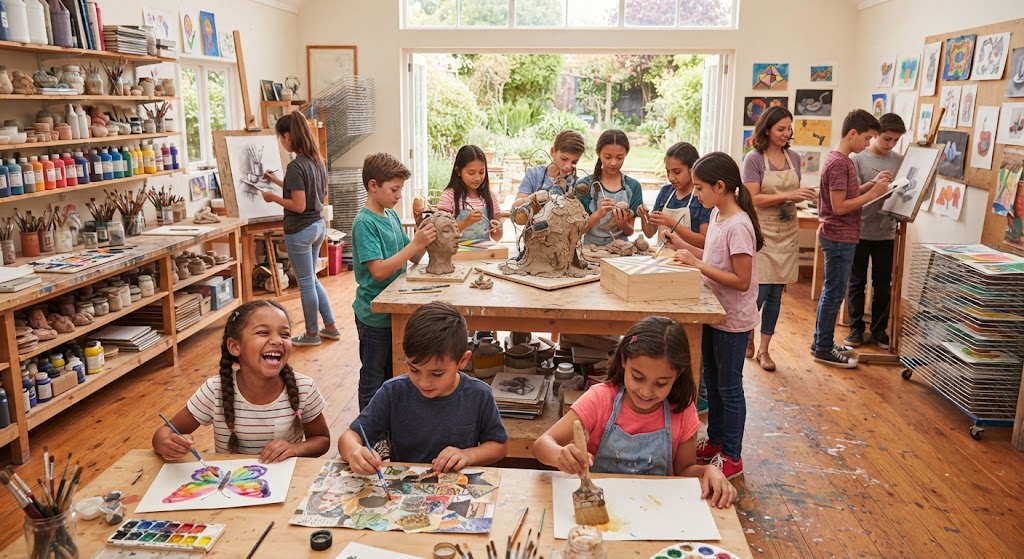
Engaging students through visual arts activities is essential at various educational levels. Different age groups bring unique perspectives and skills to art creation, prompting the need for tailored approaches. This article explores effective strategies to foster creativity and artistic exploration across diverse age ranges in school settings.
Understanding the Importance of Age-Appropriate Art Activities 🧒
Adapting visual arts activities for different age groups fosters inclusivity and enhances learning experiences. Recognizing the developmental stages of students allows educators to create impactful lessons. Age-appropriate tasks ensure that each student can participate meaningfully, promoting both confidence and artistic expression.
Recognizing Developmental Differences
When planning art activities, it’s important to consider the developmental milestones of each age group. Younger students have limited motor skills but possess natural curiosity and imagination. Conversely, older students are better equipped for complex projects but may require more guidance to develop their creativity.
Educators should consider several factors when adapting activities:
-
Motor skills: Younger children benefit from simple movements and accessible materials.
-
Attention span: Short, varied activities can help maintain the interest of younger students.
-
Creative independence: Older students can take greater responsibility for planning and completing projects.
-
Technical abilities: More advanced learners may be ready to experiment with detailed techniques.
Designing Inclusive Activities
Incorporating varying levels of complexity allows all students to engage. For instance, while younger students can practice basic shapes through free drawing, older students can explore advanced techniques like shading and perspective. This inclusivity enriches the classroom environment and gives everyone an opportunity to progress at their own pace.
Implementing Fundamental Art Elements Across Age Groups 🖌️
Utilizing foundational art elements—such as color, shape, and texture—creates a cohesive starting point for all students. By teaching these elements, educators provide a common language that transcends age differences, laying the groundwork for individual interpretation and creativity.
Teaching Techniques and Principles
To meaningfully engage students with varying skills, introducing core artistic techniques is essential. For example, demonstrating how to blend colors can spark excitement among younger students while allowing older pupils to create dynamic, layered artworks. Teachers can introduce techniques such as:
-
Color mixing: Experimenting with primary and secondary colors.
-
Drawing shapes: Combining basic forms to create recognizable images.
-
Texture exploration: Using different materials to produce varied surfaces.
-
Shading: Creating depth and contrast through light and shadow.
-
Perspective: Exploring how objects appear from different viewpoints.
These activities foster appreciation for different artistic styles while helping students build practical skills.
Encouraging Personal Expression
Once students grasp basic techniques, allow them to express their individuality. Providing choices in project themes empowers students and bolsters their creativity. Younger students might create simple representations based on animals or nature, while older students could tackle social issues or abstract concepts.
Giving students the freedom to choose colors, subjects, and materials also encourages experimentation and helps them develop a personal artistic style.
Implementing Age-Responsive Projects 🧩
Engaging visual arts projects can vary significantly between age groups, catering to the interests and abilities of each. Tailored assignments encourage collaboration and individual expression, enhancing both artistic skills and social connections among peers.
Collaborative Art Projects
Collaboration sparks creativity and fosters relationships in the classroom. Group projects, such as murals or large collages, enable students to work together. For example, allowing younger students to contribute individual pieces to a collective mural helps them understand teamwork, while older students can plan, design, and execute larger concepts.
Teachers can organize collaborative activities such as:
-
Classroom murals: Each student creates a section that contributes to a shared composition.
-
Group collages: Students combine drawings, photographs, and cut-out shapes.
-
Themed displays: Small groups produce artworks around a common subject.
-
Recycled art installations: Students transform everyday materials into a collective creation.
These projects encourage communication, cooperation, and respect for different creative approaches.
Integrating Technology into Art Education 💻
Incorporating technology, such as digital drawing tools or video editing software, opens new avenues for artistic expression. Younger students can enjoy playful applications, while older students explore more sophisticated techniques, bridging the gap between traditional and contemporary art forms.
Digital activities can include:
-
Creating illustrations with age-appropriate drawing applications.
-
Experimenting with digital colors, patterns, and textures.
-
Producing simple animations or short videos.
-
Combining photographs and graphic elements into digital collages.
The choice of software and equipment should match students’ abilities and the educational objectives of each lesson.
Assessing Artistic Development 🌱
Assessment of artistic skills across age groups can prove challenging. Rather than focusing solely on finished products, educators should recognize the process involved in creating art. Providing feedback that emphasizes growth and effort encourages students to continually develop their skills.
Implementing Reflection Sessions
After completing art projects, consider hosting reflection sessions where students discuss their experiences and insights. This practice not only builds confidence but also allows students to appreciate diverse perspectives while reinforcing their understanding of artistic elements and techniques.
Educators can guide these discussions with questions such as:
-
What did you enjoy most about creating your artwork?
-
Which technique did you find challenging?
-
What would you like to try differently next time?
-
What inspired your choice of colors, shapes, or materials?
These conversations help students recognize their progress and become more aware of their creative decisions.
Encouraging Peer Feedback
Involving students in peer feedback sessions cultivates critical thinking and communication skills. Encouraging younger students to share their feelings about each other’s work promotes a supportive atmosphere, while older students can engage in more analytical discussions, refining their artistic voices.
Feedback should remain constructive and respectful. Students can focus on what they appreciate, identify interesting details, and suggest possible improvements without judging another person’s abilities.
Final Thoughts on Fostering Creativity ✨
Creating visual arts activities tailored for different age groups enriches the educational experience and enhances students’ communication and collaboration skills. By emphasizing age-appropriate learning, educators can inspire creativity, individuality, and confidence in students, laying a solid foundation for lifelong artistic engagement. 🎨