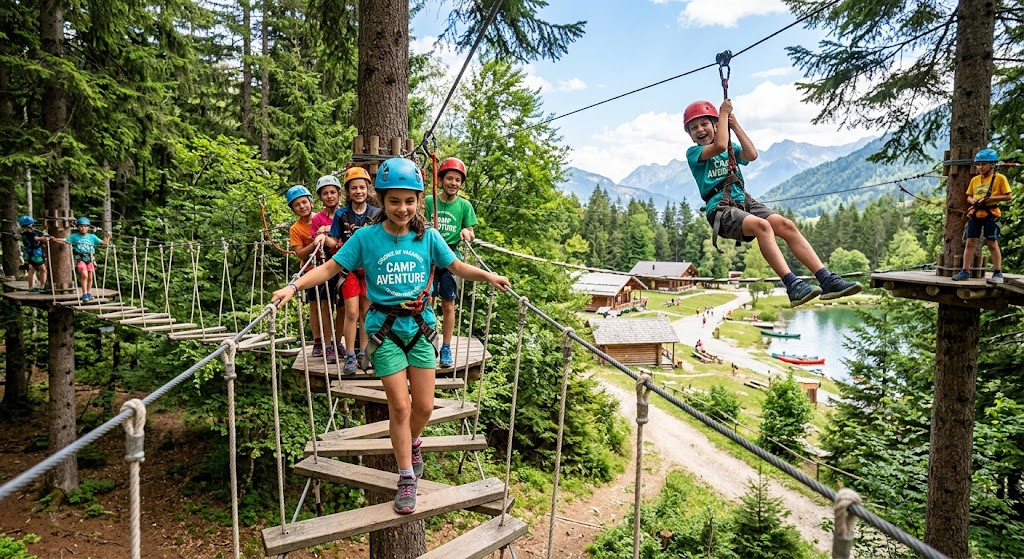
Outdoor adventure activities can turn a summer camp day into an opportunity for movement, discovery, creativity, and connection. The best choices depend not only on age, but also on campers’ abilities, staff preparation, available space, weather, and program procedures. From nature exploration and team building to hiking, water-based activities, and indoor alternatives, a varied plan helps different age groups take part in meaningful ways.
Age Groups and Outdoor Adventure Activities
Age-appropriate activities offer a useful starting point for summer camp planning, but age alone does not determine suitability. Consider each group’s interests, mobility, confidence, support needs, and familiarity with the activity, then adjust the rules, equipment, and participation options.
Younger Campers and Simple Challenges
For younger children, short nature scavenger hunts, chalk target games, cooperative ball rolls, and guided trail walks make outdoor play easier to understand. Demonstrate one turn, use clear boundaries, and offer different ways to participate, such as pointing out an item or helping plan a route.
Older Campers and Greater Choice
Older campers may enjoy designing an obstacle course, creating a camp newspaper, building model bridges, or taking leadership roles in a team challenge. Activities such as orienteering can combine map reading with problem-solving, while a supervised hiking trip encourages observation and group responsibility.
Some camps also offer canoeing, kayaking, rock climbing, zip lining, or camping. These are not universal activity suggestions: they require suitable facilities, trained staff, appropriate equipment, and the program’s specific procedures. For many groups, a map game or tabletop shelter design can provide a lower-complexity alternative.
Adventure Choices for Different Camp Interests
A balanced activity menu includes movement, observation, making, and collaboration. This variety helps campers find an entry point, whether they prefer a lively game or a quieter way to explore.
Outdoor Games and Nature Exploration
Capture the flag, kickball, and walking or rolling relays bring energy to open spaces; adapt boundaries and rules to the group. Nature exploration can take a slower pace through leaf and cloud observation, insect sketching without handling, or a staff-guided trail walk.
Creative Projects and Team Building
Friendship bracelets, watercolor landscapes, recycled-material sculptures, and a shared camp mural give campers room to create at different skill levels. For team building, try a spoken-directions shape puzzle or a paper bridge design, allowing participants to plan, assemble, illustrate, or assess the result.
Before choosing an activity, check the program’s supervision plan, accessibility needs, site rules, and current weather procedures. Water, food, and specialist equipment call for their own established guidance; a general activity list does not replace staff training or safety planning.
Planning a Flexible Summer Camp Schedule
Alternating active and calm periods can help maintain attention and make transitions more manageable. A sample day should be adapted to local arrival, departure, rest, staffing, and supervision arrangements rather than copied as a complete schedule.
Daily Balance and Activity Choices
A morning field game might be followed by a craft or discovery project, with quiet time after lunch and a group challenge later in the day. Explain each activity in simple steps, provide roles that suit different strengths, and leave room for free choice when the program allows.
Use a planning sheet to record the group, location, materials, lead staff member, participation options, weather decision, and backup activity. Pair outdoor plans with alternatives that fit the available indoor space: a picture-clue puzzle can replace a scavenger hunt, while a paper mural can take the place of chalk design.
Useful planning checks include:
- Confirm that boundaries, equipment, and staff sightlines fit the activity.
- Offer accessible roles and adjust the challenge to the actual group.
- Prepare an indoor alternative instead of moving an outdoor game into a crowded room unchanged.
- Follow established procedures when groups change activities and responsibility transfers.
Activity Matches by Group and Setting
This table offers starting points, not fixed age rules. Review every option against the campers, staff, site, and conditions on the day.
| Group or Setting | Possible Activity | Adaptation or Planning Note |
|---|---|---|
| Younger campers | Nature picture hunt | Use a short route and visual clues. |
| Older campers | Orienteering challenge | Set a defined area and supervised route. |
| Mixed abilities | Cooperative ball roll | Offer seated participation and varied roles. |
| Rainy weather | Tabletop bridge design | Use a clear work surface and light test objects. |
After an activity, note which instructions and adaptations supported participation, then use that insight to shape the next plan. Teachers can select adventures that allow campers to engage safely, meaningfully, and at their own level, rather than simply choosing the most demanding activities.