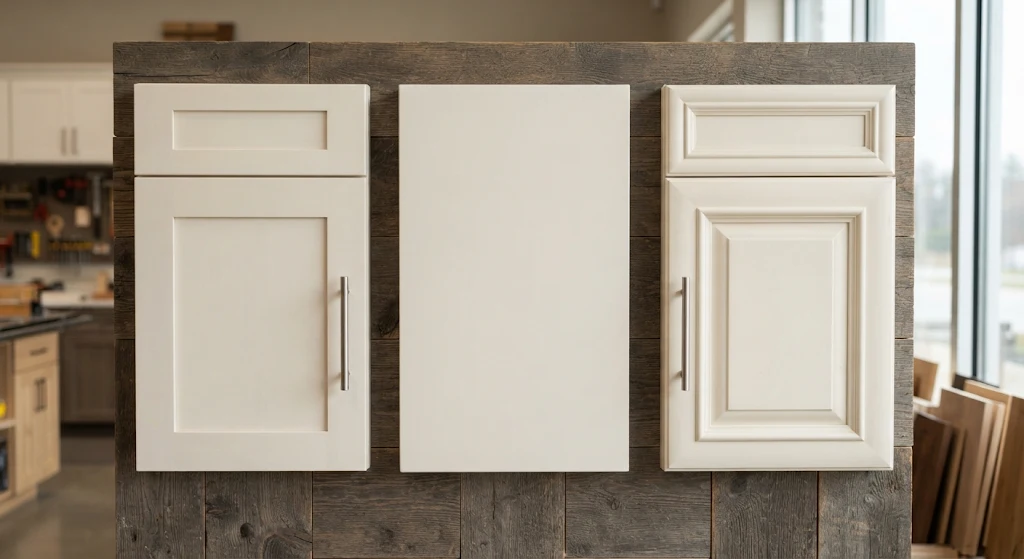
Cabinet doors occupy much of a kitchen’s visible surface, so their profile can shape the entire room. Shaker, slab, and raised-panel designs each bring a distinct balance of detail, visual weight, and everyday upkeep to custom cabinetry. Choosing well means looking beyond appearance.
Shaker Cabinet Doors for Lasting Versatility
Shaker cabinet doors feature a simple frame around a recessed center panel. Their restrained geometry gives them broad appeal, working as comfortably with traditional cabinetry as with a modern, transitional kitchen.
Proportion and finish shift their character. Wider rails, classic knobs, and warm paint create a more familiar look; narrow rails, muted colors, and discreet pulls make the same profile feel contemporary. The frame’s edges need more attention during cleaning than a smooth front, but remain manageable in everyday use.
Shaker doors are a balanced choice when flat fronts feel too plain and ornate detailing seems excessive. Their adaptability also makes them easy to coordinate with stone, tile, natural wood, and varied hardware.
Slab Cabinet Doors for a Minimal Look
Slab cabinet doors, also known as flat-panel doors, have a smooth, unframed surface that creates uninterrupted lines. They suit minimalist, Scandinavian, and contemporary kitchens, where visual simplicity helps cabinetry feel calm rather than imposing.
With few grooves or edges, these fronts are generally easy to wipe clean. Their simplicity, however, leaves little room to disguise flaws: alignment, consistent gaps, finish quality, and installation are especially noticeable. Materials can include wood veneer, lacquer, acrylic, PET, or laminate, each influencing the final color, texture, and performance.
A wood veneer slab can add warmth to a clean-lined room, while a matte, pale finish can make a compact kitchen feel brighter. The profile stays simple, but material choice gives it personality.
Raised-Panel Cabinet Doors for Traditional Depth
Raised-panel cabinet doors have a center panel that projects from its surrounding frame, creating pronounced depth and shadow. This decorative profile often complements traditional cabinetry, formal interiors, and homes with architectural details such as crown molding or high ceilings.
In a smaller room, using raised panels across every cabinet can make the space feel visually dense. A more measured design might reserve the profile for an island or selected cabinets, keeping other surfaces quieter. Simple hardware and restrained colors can also prevent the detailing from overwhelming the room.
Compared with slab fronts, raised panels take more attention to clean around their edges and contours. Their dimensional character is best suited to kitchens where cabinetry is intended to read as a prominent architectural feature.
Selection Criteria for Custom Cabinetry
Style is only one part of a successful cabinet design. The door material, finish, hardware, cabinet construction, and installation all affect how the finished kitchen looks and performs.
Before settling on a profile, compare the factors that matter most in daily use:
- Architecture: Match the door’s character to the home, from simple slab fronts in modern spaces to framed profiles in classic interiors.
- Room size: Consider lighter colors and simpler designs in compact kitchens, where elaborate details may add visual weight.
- Maintenance: Smooth fronts are easiest to wipe; grooves and raised details need more careful cleaning.
- Materials and finish: The same profile can look very different in painted MDF, solid wood, or veneer.
- Hardware and construction: Pulls, hinges, overlay, and precise installation influence both appearance and everyday function.
Reviewing a full-size door sample beside the countertop, flooring, and backsplash can reveal differences in grain, sheen, and proportion that small swatches conceal. A professional can also assess whether the chosen materials and hardware suit the cabinet dimensions.
Mixed Cabinet Door Styles for a Cohesive Kitchen
Combining profiles can add contrast without making the room feel disjointed. A useful approach is to choose one dominant style, then introduce a second as an accent—for example, slab doors on tall storage with Shaker fronts on base cabinets.
Shared colors, finishes, hardware, or proportions help tie different profiles together. Glass-front doors can also lighten a selected upper cabinet, while textured or fluted details may bring focus to an island. The more profiles a kitchen combines, the more important a clear visual hierarchy becomes.
Ultimately, custom cabinetry works best when the door style reflects the home, supports daily routines, and coordinates with its materials. A cabinet professional can provide personalized guidance on profiles, construction, and installation.