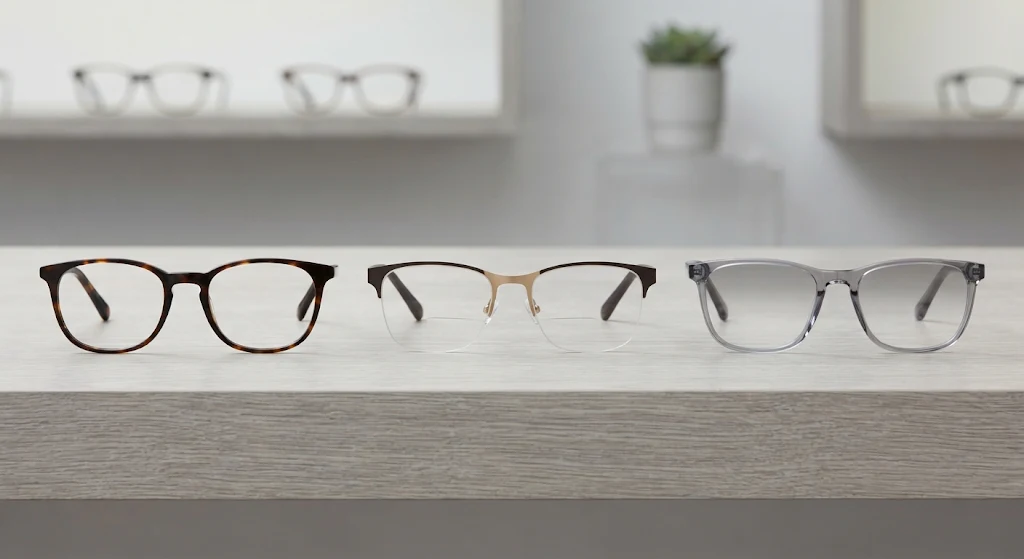
Choosing prescription eyeglasses involves more than reading a lens prescription: the design determines which distances appear clear and how easily the eyes move between them. Single-vision lenses correct one range, bifocal lenses divide near and distance vision into two visible zones, while progressive lenses blend several viewing distances without a line. Understanding these differences can help match optical lenses to daily tasks, comfort, and the way vision changes over time.
Understanding Single-Vision, Bifocal, and Progressive Lenses
Single-vision lenses have one corrective power across the lens, suited to a single viewing range. They may provide distance-vision correction, near-vision correction, or a dedicated intermediate prescription for computer work. They are commonly prescribed for myopia, hyperopia, or astigmatism, and their consistent viewing area is generally straightforward to adapt to.
When near focus becomes harder with age, a single prescription may no longer cover every task. Presbyopia is a normal change in the eye’s focusing ability; an updated examination helps establish whether separate pairs or a multifocal design would better meet visual needs.
Distinguishing Bifocal Lens Zones
Bifocal lenses provide two powers: the upper area is usually set for distance and a lower segment for close work such as reading. A visible line marks the change, making the near zone easy to locate, though some wearers notice an image jump when their gaze crosses between areas.
Because bifocals do not typically include a dedicated intermediate zone, a computer screen may not fall into sharp focus without adjusting head position or using another pair. Their clear, defined zones can still suit people who want a simple way to handle near and far vision.
Recognizing Progressive Lens Transitions
Progressive lenses gradually change power from distance at the top, through intermediate vision in the middle, to near vision below. With no visible dividing line, they offer a more continuous transition and can support frequent shifts between activities.
The change in power also creates narrower usable areas and peripheral distortion in some designs. New wearers may need time and guidance to learn where to look; careful measurements and an appropriate frame fitting can improve comfort.
Comparing Prescription Eyeglasses by Everyday Use
Each design makes a different trade-off between viewing range, appearance, and adaptation. This comparison can clarify the options, but it cannot replace an individual assessment of the lens prescription.
| Lens Design | Viewing Range | Visible Line | Common Consideration |
|---|---|---|---|
| Single vision | One prescribed distance | No | May require separate pairs for other distances |
| Bifocal | Near and distance | Yes | Limited intermediate vision; possible image jump |
| Progressive | Near, intermediate, and distance | No | Adaptation and accurate fitting matter |
For example, a prescription intended for distance may make road signs clear but leave close reading uncomfortable. A computer-focused single-vision lens can address screen distance, while a progressive design may be more practical when work involves frequent shifts between a monitor, documents, and people across a room.
Choosing Eyeglass Lenses for Vision and Lifestyle
The best option depends on what needs to appear clear throughout the day, how often focus shifts, and which design feels comfortable. Before selecting lenses, consider the following factors and bring them to an optometrist or qualified optical professional.
- Main viewing distance: Identify whether glasses are chiefly for reading, driving, screen work, or a mix of tasks.
- Intermediate needs: Consider whether computer use requires a dedicated zone that standard bifocals may not provide.
- Adaptation and comfort: Discuss possible adjustment time, peripheral effects, and any history of difficulty with multifocal designs.
- Frame fit: Ensure the eyeglass frames can accommodate the chosen lens design and be measured accurately for its optical zones.
Prescription accuracy is only part of the result: lens positioning, pupillary measurements, frame shape, and how the glasses sit on the face also affect usable vision. An optician can explain design choices, while an eye-care professional can verify the prescription and assess changes in eyesight.
Single-vision lenses offer focused correction at one distance, bifocals divide near and far viewing into distinct zones, and progressives provide a gradual range with no visible line. For personalized guidance on prescription eyeglasses and a suitable fitting, consult an optometrist or qualified optical professional.